Is America In Its “Pluto Return”? Explaining This Year’s Turmoil With Astrology
February 19, 2026
Astrology could hold the reasons why everything is so crazy right now.
To say we’re in a period of upheaval in both our country and the world right now would be an understatement. From overthrowing dictators in Venezuela to countrywide protests in Iran preceding a possible military intervention to the Epstein files release, “turmoil” is one word to describe the state we are collectively in.
When things feel too big for me, I often look up. To me, it’s in the form of prayer. But I also am a believer in understanding our world by looking up, quite literally, at the heavens.
For thousands of years, astrology is one way people have connected with the concept of a greater power, pondering questions like, “Who’s out there?” “Why are things happening like this?” and “Where do I fit in?”
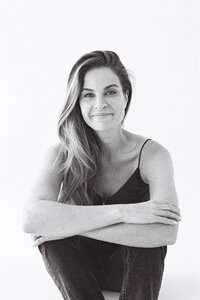
This past week on the podcast, I had a guest who has a deep knowledge of that subject, and also—as a bonus—ties in the concept of God or spirituality to it. I’m excited for you to listen to or watch this conversation with astrologer and scientist Jill Brown.
I personally believe that our universe is a symphony of each of these types of the divine—both God’s powers and the literal pull of stars and planets. And I don’t believe they conflict with each other.
Having someone on the pod to discuss both of these forces and their impact on our collective consciousness was such a gift. I hope you enjoy listening to this interview as much as I enjoyed doing it! And as always, if this post is interesting or helpful to you in any way, consider sharing it with a friend. Thanks in advance!
These questions and answers have been generated from a transcript of our interview, and will include exact quotes from the actual interview, as well as edited quotes for brevity and clarity.
Is America In Its “Pluto Return”? Looking at Astrology to Understand Why So Much Weird Sh** is Happening Right Now
Sonni: Hi Jill, thanks so much for being here.
You have a master’s in aeronautics, a background in marketing at Disney, and you’re a NASA research scientist. When we call you an astrologer, you’re bringing an actual working knowledge of the universe from a scientific perspective. How did you reconcile science and spirituality?
Jill: I think I was a late bloomer in astrology. I was always sort of a spiritual person and a scientific person, but I have a very scientific mind. Of course, I looked at my sun sign — I think that’s the one universal thing most people at least know — “I’m a Pisces,” or “I’m a Taurus,” or whatever. But that’s about as deep as it went for me until my mid-30s.
When I was going through college, it felt like there were two ends of the spectrum. What I’ve really realized is there’s a lot of opportunity for integration and overlay there. You hear people in the “woo-woo” community talk about energy and frequency, but then when you start getting into physics and the scientific realm, it’s like, well yes — energy doesn’t die, it recirculates, systems have entropy. These concepts have scientific principle and application, and they also have crossover into spiritual context.
For me, they became less mutually exclusive and more integrated. I sit right down the middle where they support each other instead of contradict one another.
You hear people in the “woo-woo” community talk about energy and frequency, but then when you start getting into physics and the scientific realm, it’s like, well yes — energy doesn’t die, it recirculates, systems have entropy. These concepts have scientific principle and application, and they also have crossover into spiritual context.
Sonni: You grew up Mormon. Are you religious now, or more generically spiritual?
Jill: I’ve become more generically spiritual. I grew up very, very strict Mormon. I went to BYU for a couple of years. Falling out of the Mormon religion—and that sounds negative, it wasn’t—I just had more questions than that organization could answer for me in a satisfactory way.
That took me outside of that framework. I discovered there were things in Catholicism I loved, things in theosophy I loved, things in Buddhism I loved. I came across a Rumi passage once that said, “We’re all fingers pointing at the same moon.” When you get to the crux of true religion or true spirituality, it’s a desire to have that connection back to that one.
Sonni: Let’s talk about the U.S. astrologically. You’ve mentioned the Pluto Return. What does that mean?
Jill: When we look at people, we use the moment in time you’re born to map out your birth chart. It’s essentially saying: here are your areas of focus, challenge, and growth. You have total agency. Astrology isn’t a puppet master. It’s wisdom and insight — you can take it or leave it.
Countries are the same way. The United States’ birth date is July 1776. When the U.S. was born, Pluto was in Aquarius. Pluto takes about 250 years to complete an orbit. Starting last November, Pluto came back into Aquarius for the first time since the country’s inception.
Aquarius is the sign of rebellion and revolution. On one hand, that’s what made us a country. On the other hand, revolution is chaotic and destabilizing. We glamorize that period now, but it was full of uncertainty and violence.
Pluto will stay in Aquarius for about 20 years. That doesn’t mean 20 years of chaos. It means it’s time to reassess, to have uncomfortable conversations about who we are and whether this is who we want to be. If not, what action do we take to change that, individually and collectively?
Pluto will stay in Aquarius for about 20 years. That doesn’t mean 20 years of chaos. It means it’s time to reassess, to have uncomfortable conversations about who we are and whether this is who we want to be. If not, what action do we take to change that, individually and collectively?
Sonni: What about this specific year? Does anything feel especially activated?
Jill: Yes. We have several outer planets shifting signs, and those are big transits.
Neptune moves into Aries at the end of January 2026 and stays there until 2028. Neptune governs mysticism and spirituality. In its higher expression, it’s intuition and connection to something divine. In its shadow expression, it’s disassociation and escapism—[things like] addiction, confirmation bias, consuming only what reinforces your worldview.
Aries is the warrior; it’s courage and willpower. So Neptune in Aries is saying, it’s time to put courage behind those beliefs. Ask, “Who benefits from this viewpoint? Who benefits from this narrative?” There has to be conversation.
Saturn also moves into Aries. Saturn governs discipline and structure. How we show up every day is who we really are. The boring stuff is the important stuff—showing up locally, participating in your community, writing your representatives. It’s small, consistent engagement that adds up.
Sonni: Later in the year, you mentioned eclipse season. What does that typically bring?
Jill: Uranus moves into Gemini for seven years. Then in August, we have eclipse season and a conjunction. Eclipses tend to bring big reveals — shocking truths, sudden revelations. Secrets coming to light.
It can feel worse before it gets better — like pulling everything out of your closet before reorganizing it.
This year and next feel like groundwork years. We’re seeing what’s working and what isn’t. Then both individually and collectively, we decide how we move forward.
Sonni: On a personal level, most people only know their sun sign. How important is that compared to the rest of the chart?
Jill: Your sun sign is easy to bucket because it’s just your date of birth. But everyone also has a moon sign and a rising sign — your primal triad.
Often, you’re more of an embodiment of your rising sign than your sun sign. Your sun sign can feel like what you’re here to learn this lifetime.
There are also deeper placements, like Chiron — the karmic wound. Chiron represents the idea of turning your wound into wisdom. If you stay unconscious of your wound, you writhe around in it. If you become conscious, you can transform it and help others.
Sonni: Before we wrap, let’s talk frequency. How do daily choices affect our energetic state?
Jill: Small, incremental change. Not jumping from 10 to 100 overnight. The music you listen to, the food you eat, the thoughts you repeat — it all matters.
Question intrusive thoughts. “Is this true? How do I know this is true? What would life feel like if this weren’t true?”
Regulate your nervous system. Engage with the world without disassociating. But also know when it’s enough for today. Go for a walk. Talk to a human.
Thank you so much for reading. This has always been a space where you’ll find both serious topics and lighter ones, and for those who are here to take it all in, I’m grateful. I hope this interview opened your eyes in a small way, and you’ll consider sharing with a friend.
