Will Independent Media Save the Country?
February 12, 2026
It’s overwhelming to ponder the sheer number of news sources a person can access today. Between all the traditional outlets, both on screen and in print, as well as the content put out daily by independent media, it would be impossible to take it all—or even a large portion of it—in.
Bias also inevitably informs the news we get. Viewers and readers will go to their preferred left- or right-leaning sources, and you may get very different versions of the same story based on the outlet. That desire for confirmation bias—to follow coverage that validates our own held beliefs—is natural, but it can also impede our understanding of basic, underlying truths.
This topic of news consumption—a combination of both news and psychology, I suppose—is infinitely interesting to me. Like many of my colleagues, I’ve sunk years into the mainstream world, only to get out of that space and see that so much remains tainted by bias. And perhaps even more disturbing, there’s a kneejerk criticism if anyone who dares to reveal that.
But criticizing something alone doesn’t solve the problem, and that’s where good independent journalism can come in.
To be frank, independent media and journalists have both fueled the fire of division and fought it.
Good creators show you the truth laid bare and keep an eye on facts mainstream outlets don’t have the inclination or time to cover. Divisive creators pick and choose facts to support their bias, all in an effort to inflame emotion.
All that being said, I’ve wanted to have an independent media journalist on the podcast for a while to discuss these very issues, and I’m excited to say I did so this past week.
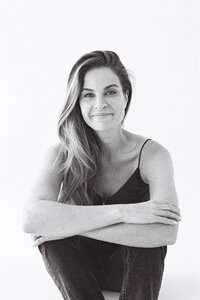
Stella Inger-Escobedo, whose biography you’ll read below, was the perfect pick for a conversation on the topic of independent media. She’s been in both the mainstream and creator space. Although she’s certainly has leaned into opinion coverage at times, she’s also clear about how and why she reports what she does.
This chat is about where media is going, why living through communism has changed how she reports, the backlash she experienced after leaving the mainstream world, and so much more. Please give it a read or listen, and if you enjoy it, consider sharing it with a friend or simply clicking the heart icon at the bottom, which helps get the post out to more people.
You can listen to the episode here, watch it on my Substack, or read an edited transcript below. These questions and answers have been generated from a transcript of our interview and may or may not reflect exact quotes from the actual interview.
Can Independent Media Do What Institutional Media Won’t?
Trust, Truth and the Future of Journalism, with Stella Inger-Escobedo
Sonni: Stella, thank you so much for being here. I kind of tracked you down on Instagram and made you do this, so thank you for joining me. I want to start with your backstory. A lot of people who see your content may not be familiar with the very literal journey your family took to get to the U.S. Can you tell us who you are and how you got here?
Stella: I often say I’m living the American dream. This is a country where you can come from literally nothing and still build a life. I’m a Soviet Jewish refugee. My parents were born in Ukraine during the Holocaust. My grandparents fled to Uzbekistan, to Tashkent, and that’s where I was born. When I was seven years old, we fled as refugees. A lot of former Soviets who live in the U.S. have very similar stories, and many have reached out to me after I shared mine.
During the process of coming to the U.S., we lived in Italy with many other refugees. This was during the fall of communism. Families were given the option to go to Israel or wait to be adopted by a Jewish community in the United States. We were adopted by a wonderful community in Sioux City, Iowa. We lived there for about a year before my parents packed a U-Haul and drove us to Los Angeles, where I grew up.
I’ve always had an inquisitive mind and wanted to be a voice for the voiceless. I studied broadcast journalism at USC, and my career took me all over the country. I worked in Montana, Palm Springs, Phoenix, Tucson, San Diego, and also did work for CBS News Path. I really know the industry inside and out.
Sonni: Given your background and perspective, you bring something unique to journalism. What story really changed how you view journalism, and do you believe true objectivity still exists?
Stella: Growing up under communism gave me a very specific lens. The Soviet Union had a newspaper called Pravda, which literally means “truth,” and it was anything but that—it was propaganda. That stayed with me. I got into journalism because I believed in objectivity. USC taught us that you don’t create the news; you let the news be the news.
When I approach a story, I don’t go in knowing what it’s going to be. I show up, ask questions, and talk to people. But my perspective shifted as I got older, especially after having kids. Issues like politics, the economy, and education suddenly became personal.
My real turning point was COVID. I was in California on lockdown with a small child. My husband and I were both working, schools were closed, and there was no childcare. These were real problems families were facing, but the media wasn’t covering them. If you asked questions, you were labeled irresponsible or worse. That’s not journalism.
Then October 7 happened. The massacre in Israel and the protests that followed were incredibly disturbing to me. The media wasn’t asking basic questions. That’s when I went on social media and said, “Why aren’t journalists asking what ‘from the river to the sea’ actually means?” That video went viral because people are yearning for real journalism. They want their real conversations reflected.
Sonni: I notice people crave objectivity, but they also reward opinion. As a creator, how do you deal with that tension?
Stella: We live in echo chambers, whether we like it or not. Social media reinforces them. I don’t want to shove my opinions down anyone’s throat. I want to open people’s eyes and encourage them to research for themselves.
I’ve had people message me saying they’re lawyers or professionals who thought one way, then did their own research after watching my content and changed their minds. That matters to me. Once you see something clearly, you can’t unsee it. My goal is to empower people to think for themselves, not tell them what to think.
Sonni: When people ask where to go for trustworthy information, what do you tell them?
Stella: I’m very diversified. I look at mainstream media while also recognizing their flaws. For example, outlets repeatedly quoted Gaza Ministry of Health numbers without clarifying that it’s run by Hamas, a terrorist organization. That matters.
I pushed back on that publicly, and eventually outlets started clarifying it. My approach is to look everywhere, understand context, and never rely on a single source. No outlet is perfect.
Sonni: What did you think of major outlets’ coverage after October 7?
Stella: I thought it was awful and embarrassing. The starvation narrative pushed by major outlets was propaganda. One outlet ran a misleading image of a sick child and blamed Israel, only to later quietly retract it on a platform no one follows.
Meanwhile, people in Gaza were posting videos of restaurants, food, and daily life. The mainstream media ignored that. That’s lazy journalism. If journalists were doing their jobs, they’d investigate what’s being shown online instead of repeating narratives.
Sonni: Do you think local journalism is the last place still striving for objectivity?
Stella: Not really, and here’s why. Our universities have been captured ideologically, and those students enter newsrooms. Many interns come from places like Al Jazeera. That mindset filters into mainstream media.
I once went to UCLA to ask students—journalism students—whether Hamas committed atrocities on October 7. They refused to answer. That told me everything. If future journalists can’t acknowledge basic facts, that’s a serious problem.
Sonni: Independent journalists are often labeled conspiracy theorists. How do you deal with that?
Stella: It’s terrifying. I was targeted in a hit piece after interviewing reputable experts during COVID. The goal was to discredit me. But it didn’t work because my audience knows me.
What scared me most was realizing how easily someone can try to destroy your reputation once you leave the protection of mainstream media. When I worked inside the system, no one questioned me. The moment I went independent, the attacks started.
Sonni: What gives you hope for the future of journalism?
Stella: People like you and me. Independent journalists are forcing mainstream media to work harder. When someone like Nick Shirley uncovers a story that goes viral, it exposes failures in traditional journalism.
People want transparency. They want accountability. If independent journalists keep pushing, it may force the industry to improve. That’s my hope.
Thank you so much for reading. This has always been a space where you’ll find both serious topics and lighter ones, and for those who are here to take it all in, I’m grateful. I hope this interview opened your eyes in a small way, and you’ll consider sharing with a friend.
